
Emotional Regulation in Children: A Guide for Primary School Parents
If your child is in primary school, you have heard teachers talk about emotional regulation, behaviour, or self-control.
At LS Tuition, many parents come to us concerned about:
- After-school meltdowns
- Struggles with behaviour in school
- Difficulty managing frustration with schoolwork
- Anxiety around tests or friendship
The good news is that these challenges are common, and they’re something children can learn to manage with the right support.
What is Emotional Regulation?
Emotional regulation is a child’s ability to manage their feeling and reactions especially during challenging situations.
In primary school, this might look like:
- Coping when they lose a game or get something wrong
- Managing frustration with reading, writing, or maths
- Handling friendship issues in the playground
- Staying calm enough to focus in lessons
It’s important to remember that these skills are still developing throughout primary school.
Why Emotional Regulation is so Important
Strong emotional regulation skills support:
- Learning in the classroom (focus, resilience, independence)
- Positive behaviour at school
- Friendships and social confidence
- Preparation for secondary school
Children who struggle with regulation may be labelled as having ‘behaviour issues’, but often they simply need more support with emotional skills.
Why Children Often ‘Fall Apart’ After School
A common concern we hear from parents is “my child is fine at school but melts down at home”.
Children spend the school day:
- Following rules
- Managing expectations
- Controlling their emotions
By the time they get home, they feel safe enough to release everything they’ve been holding in. This isn’t bad behaviour, it’s a sign they trust you.
Understanding Behaviour in UK Schools
In many UK primary schools, behaviour systems focus on:
- Rewards and consequences
- ‘Good sitting’ and listening
- Meeting classroom expectations
While these are important, they don’t always address the root cause of behaviour.
From an emotional regulation perspective, behaviour is communication.
For example:
- Avoiding work may signal frustration or low confidence
- Disruptive behaviour could be cause by overwhelm or unmet needs
- Shutting down is often linked to anxiety
What Helps in the Moment (at home)
When your child is overwhelmed after school:
Lower expectations temporarily
Give them time to decompress before homework or structured tasks
Create a calm transition
Snacks, quiet time, or screen-free relaxation can help
Validate Emotions
Saying things like “that sounds like a tough day” or “I can see that you’re really frustrated” helps them validate their emotions and support regulation
Avoid Immediate Problem Solving
Focus on calming first, the solutions can come later
Building Emotional Regulation Skills at Home
These strategies are particularly effective for primary aged children:
Use everyday moments to teach emotions
Talk about feelings during stories, TV shows or daily life
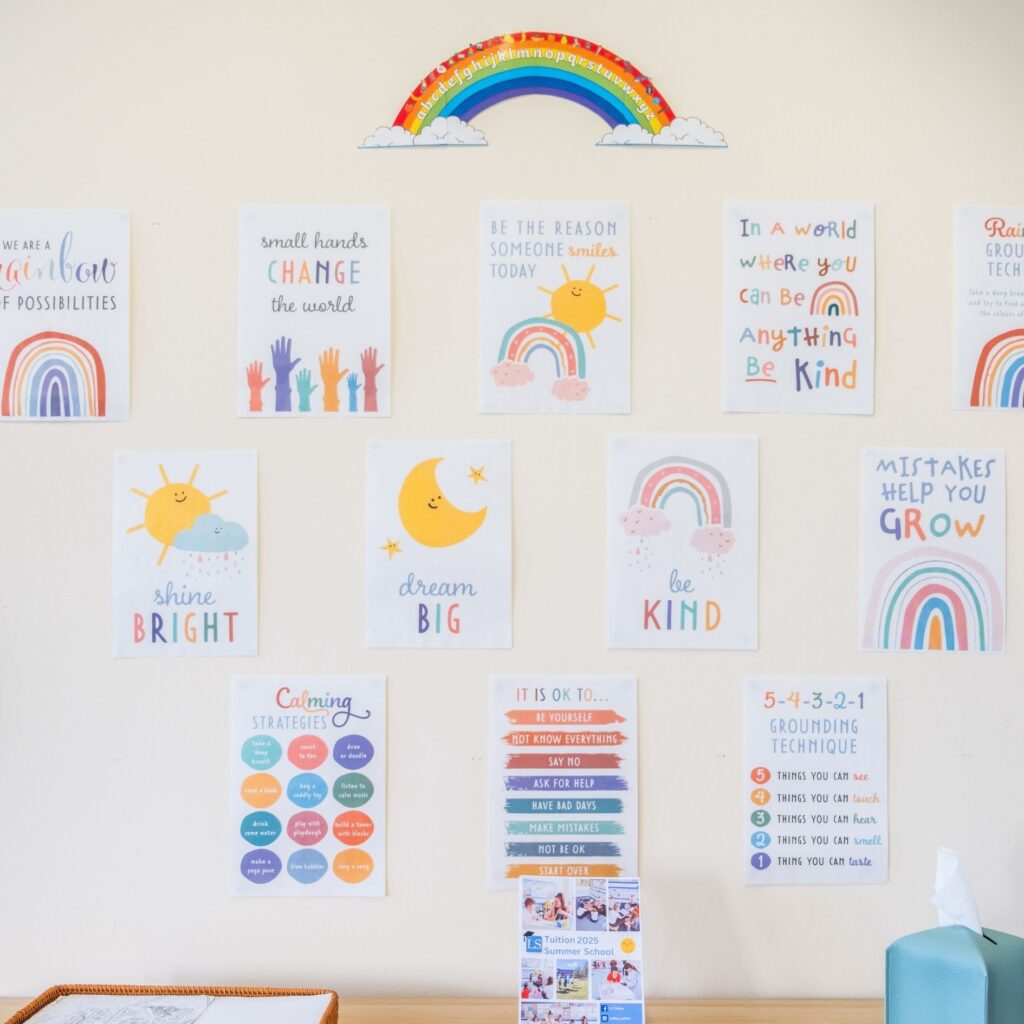
Practise simple calming techniques
- Deep breathing
- Counting to 10
- Taking a break
Support homework without pressure
Struggles with learning often trigger emotional reactions
Keep routines consistent
Predictability helps children feel secure
Model calm behaviour
Your responses teach them how to respond
Supporting Children with Additional Support Needs (SEN)
Some children may need extra support, particularly those who are neurodivergent.
These children may:
- Become overwhelmed more quickly
- Find transitions harder
- Need more co-regulation from adults
In UK schools, this may be supported through SEN provision, but support at home remains just as important.
A Helpful Mindset Shift for Parents
Instead of asking “how do I stop this behaviour?”
Try:
“What is my child finding difficult right now?”
This shift can completely change how you respond, and how your child learns to cope.
How LS Tuition Supports Emotional Regulation
At LS Tuition we regularly work with children who:
- Lack confidence in learning
- Feel anxious about schoolwork
- Become frustrated or disengaged
By creating a calm, supportive environment, we help children:
- Build confidence
- Feel understood
- Develop both academic and emotional skills
Emotional regulation isn’t something that children ‘just grow out of’, it’s something they learn with support, and primary school is the most important time to build these foundations.
With patience, consistency, and understanding, your child can develop the skills they need. Not just for school, but for life.
If you are interested in working with LS Tuition to support your child’s confidence in their learning, book a free discovery call with us today.